
My first years as a Principal, a common question I would ask candidates at the end of an interview is what four adjectives their students (or peers) would use to describe them. Four is a good number as many people quickly cite two or three. I don’t let them off the hook for that last one as it often brings the best answer as it necessitates the most thought. One interview sticks with me as the candidate offered an answer I had not ever heard before, and that I have not since received. BOLD. She shared that others thought of her as bold. What an amazing term to use for multiple reasons. First, as I mentioned, it is not common. Second, it is an honest admission from the candidate that “you’re going to get something a little different with me.” I hired her and we did. Though, honestly, I’m not sure we were ready for it.
Last week I was revisiting Chapter 8 of Todd Whitaker’s What Great Principals Do Differently” and I was struck, again, by his notion that we should strive to make our schools more like our newest teachers. He contends that the most effective way to improve a school is to hire great teachers. I don’t know anyone that would disagree with that at face value. However the catch is on the approach you take toward that end. What do you do once you’ve hired them?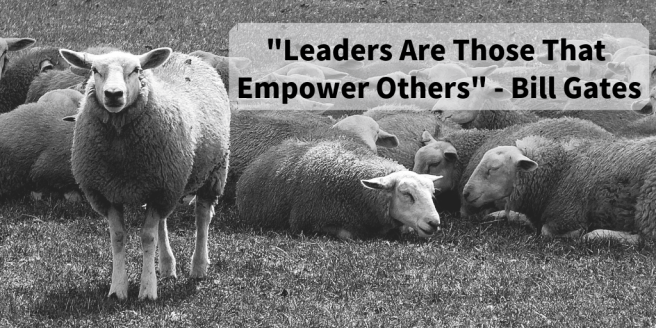 In the past I have challenged some new hires to help us continue to grow. I offered this charge to those coming in to leadership positions though they were primarily outside the classroom (administrator, counselor, coordinator, etc.). I would tell them, “I didn’t hire you to sit on the bench. I expect you to get your footing and then get to sharing. We need your talents, your ideas, and your passion. Can you commit to get in the game with us?” The most common response was a “You bet” or a “Yes, I can.” Upon further reflection, I realize that I was not challenging new teachers to do the same. I suppose I didn’t want to “saddle” them with the responsibility of improving our campus. Yet, at the very same time, I knew/know that the most powerful work for students happens as a result of what teachers do every day in their classroom. So I suppose, while maybe having a good intention, I was instead limiting the impact of these new members. Not cool.
 My commitment is now to push ALL new members to our school community. I will lay this foundation during the interview process and continue it in to the fall semester. There is so much talent that can be leveraged for the betterment of our kids. And sometimes all you need is that one person to float a novel idea, see something in a fresh light, or simply ask an old question in a new way. Makes no matter how it begins – only that it does.
How are you going to set the tone when it comes to improving your class, team, or school?



 This year I have established the Mad Cool Awards. Focused on recognizing innovative work that is happening on campus, adults have the chance to recognize really cool stuff that is happening on their campus. Realizing that innovation is simply taking something that already exists and making it better, I ask them to complete a Google Form that asks just a few simple questions. And I consistently include the link to this form at the beginning of meetings and as an extra piece every so often within an email.


 As a result of my PLN growing over the last several years, I have become convinced that investing in ourselves is paramount to growing stronger as leaders. If you are not pushing yourself to learn more – either through reading, writing, posting, or lurking – then you are robbing others of all you can offer. Don’t do that. Instead, get in the game. Personal or professional learning is now available 24/7 from the comfort of your couch. Will it come in spurts? Will it ebb and flow? Might it be hard and confusing at times? Yeah, probably. The most important stuff usually is.
 Accepting that JFK was right and our learning is critical toward our leadership, how can you commit to be active now?
 While the prestige I had placed on him and his open question to the neighborhood was not just that – I still walked away thinking about those three words.
 Christmas Day begins with the normal stockings and presents. And as the morning nears end, we prepare for lunch. However, with deliberate intent, there is no stress in preparation for this meal. Cold cuts, fresh rolls, chips and queso lead the way. Instead of a ham or turkey with tasty sides, we choose melted cheese rolling over perfectly salted tortilla chips; mayo on a fresh roll layered with salami, ham or roast beef. The prep time is minimal and we all appreciate that. Reminiscing, joking around, and warm smiles are the currency.
I love both of these traditions because of what they represent – namely that being together is what is being celebrated. You don’t need some fancy lunch/dinner that hits someone else’s expectations in order to enjoy the holiday season. Stress and angst as family members focus on a large meal is not where I want our energy. Rather all of that is traded for time being present with the person next to you. Appearances don’t matter – you don’t have to be cool or appropriate. Rather you are simply in the moment.
These two traditions remind me of the same approach I take when serving as a leader; namely that the experience is what matters, not the specific setting. Each day, week, semester and school year, I work with others to create meaningful experiences for our students and our faculty/staff. I believe that the magic that happens between our students and adults on campus has little to do with the way our building may look, the manner in which we organize the tables and chairs, or the style with which I organize the main office. Rather its about the people – all day, every day. I adore the traditions with my family and I so appreciate the way my school focuses on the very same things.
Christmas Day begins with the normal stockings and presents. And as the morning nears end, we prepare for lunch. However, with deliberate intent, there is no stress in preparation for this meal. Cold cuts, fresh rolls, chips and queso lead the way. Instead of a ham or turkey with tasty sides, we choose melted cheese rolling over perfectly salted tortilla chips; mayo on a fresh roll layered with salami, ham or roast beef. The prep time is minimal and we all appreciate that. Reminiscing, joking around, and warm smiles are the currency.
I love both of these traditions because of what they represent – namely that being together is what is being celebrated. You don’t need some fancy lunch/dinner that hits someone else’s expectations in order to enjoy the holiday season. Stress and angst as family members focus on a large meal is not where I want our energy. Rather all of that is traded for time being present with the person next to you. Appearances don’t matter – you don’t have to be cool or appropriate. Rather you are simply in the moment.
These two traditions remind me of the same approach I take when serving as a leader; namely that the experience is what matters, not the specific setting. Each day, week, semester and school year, I work with others to create meaningful experiences for our students and our faculty/staff. I believe that the magic that happens between our students and adults on campus has little to do with the way our building may look, the manner in which we organize the tables and chairs, or the style with which I organize the main office. Rather its about the people – all day, every day. I adore the traditions with my family and I so appreciate the way my school focuses on the very same things.  Which of your traditions best reflect you?

 While many of these remain aspirational – still no cot in my office – I do try and embrace the others when interacting with others (both while wearing my principal hat or my parent hat). And as a leader, I have literally and metaphorically grabbed on to this advice as it reminds me that at our core, each faculty and staff member made a decision to step in to a classroom or school where children are in need of so much. And often what they need, what we all need, is simply hope. The idea that things can be better. Complication does not usually inspire. Simplicity does.

 For twenty years we have had a single lunch for our 3000 plus students. It’s one hour long and they can eat anywhere on campus. As visitors enter the building during lunch they are often taken by surprise as the students walk, talk, play guitar, study for quizzes and just hang out with their buddies. Many walk with a bag of chips in their hand as they socialize with new friends. At the same time in classrooms on each floor there are tutorials happening, clubs meeting, and teachers simply connecting with kids. The single lunch period absolutely provides the structures needed for students to be supported in all sorts of ways. Additionally, it has also built a culture where the students completely feel like their school belongs to them. They are trusted, they have agency, and they value it. And for nearly 20 years we kept it just like that. Check out this 2 minute student-created video about our one lunch
 My learning from this is two-fold. First I learned that subtle structures within a larger piece can bring strong advantages for kids and adults. Second I learned that even your most successful and “tried & true” school routines need to consistently be re-examined so that as you learn more, they can be improved. We should never slow down when it comes to learning about how powerful our school can be for kids.
 Here’s the thing, not everyone is ready to dive in to the kind of work on themselves that Dr Brown requires. Shame & vulnerability are not easy to access no matter how willing you might be. And thus as the days approached for these two days of learning, we began to get nervous. While most had at least taken their books home for the summer, there were some that left them at school in their mailbox all summer. They didn’t even pretend!
 Sometimes we wait for consensus. Or we poopoo an idea or initiative because some won’t engage or will be negative about it. The conclusion I draw from that is two fold: (1) If you wait then that’s really more of a reflection of you & your poor leadership than of them; (2) When you hesitate to move forward with something because you don’t have 100% on board then you are giving all the power to others. Don’t do that.


 Exploring Leadership